Delivering Housing in Rural and Arctic Canada: A Panelized, Off-Grid Approach
Prepared in conversation with:

Charlie Frise
Co-Founder, Tinybox Systems
Tinybox Systems | Email | Phone
The Challange
When Canada’s housing crisis is discussed, the focus is typically on major urban centres like Toronto and Vancouver, where affordability pressures are most visible. Yet in rural Canada, housing is 50% more likely to be considered inadequate than in urban areas.
Construction in these regions presents unique structural challenges:
High transportation costs
Limited access to heavy equipment
Skilled labour shortages
Major infrastructure gaps
Smaller municipal tax bases to fund services
As Amy Coady, President of the Municipalities of Newfoundland and Labrador, notes:
“Infrastructure has been a huge challenge for us. We are seeing huge demand for housing, and property tax won’t cover our infrastructure needs.”
At the same time, many rural regions experience unemployment rates above the national average — in some provinces, double-digit rural unemployment persists. This presents a dual opportunity:
Build housing where it is needed most — and do it in a way that creates local employment.
The Demonstration Project
Project Information
Owner / Operator: Kativik Regional Government
Manufacturer: Tinybox Systems
Project Information
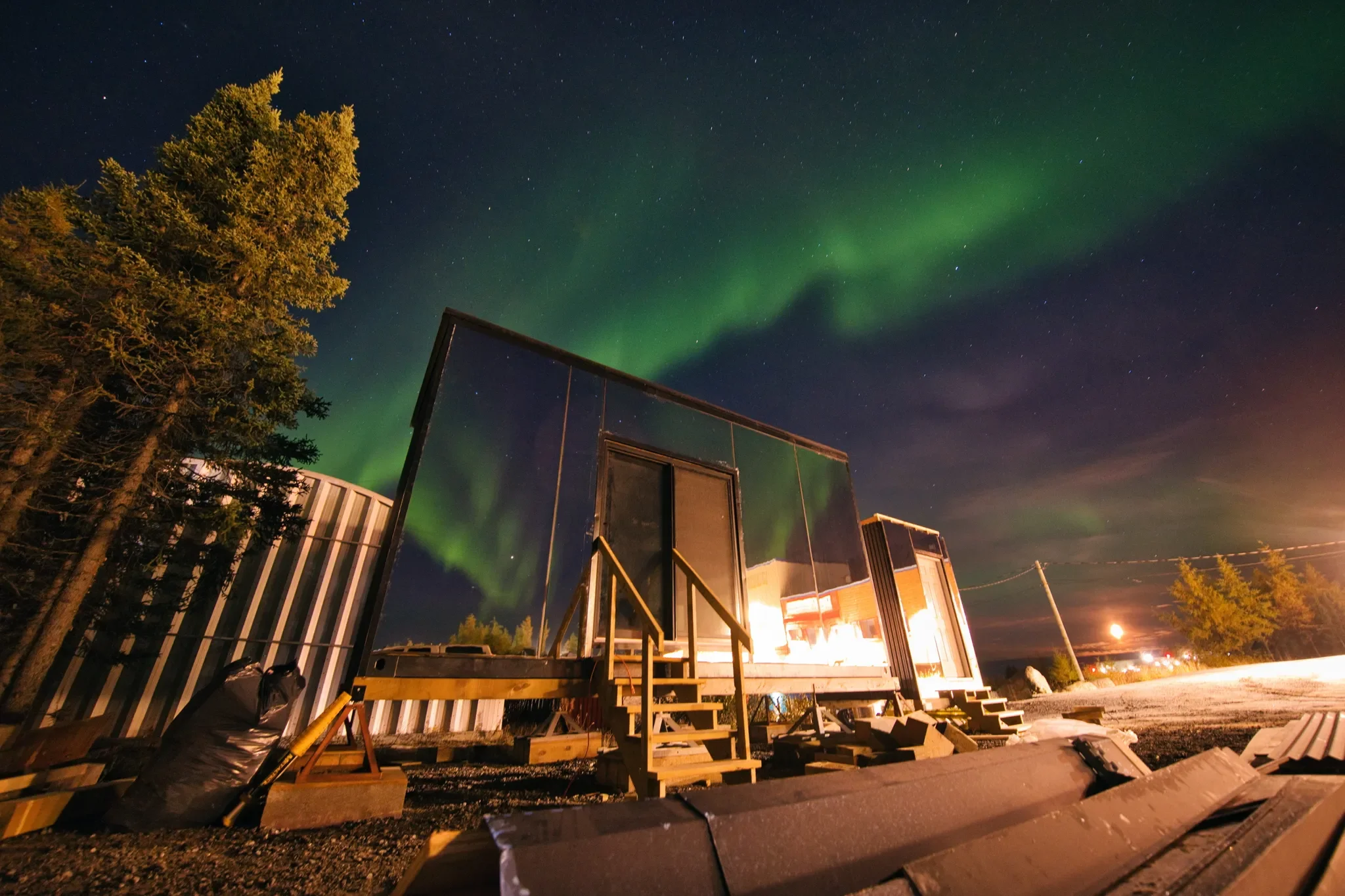
Location: Kuujjuaq, Quebec (Arctic)
Type: Workforce housing
Units: 1 unit + 1 mechnical room
Building Height: 1 storey
Gross Floor Area: 200 sq. ft.
Construction Method: Kit-based pre-fab
Completion: October 2025
Design & Delivery Innovation
1. Shipping: Kit-Based Transport
Transporting fully assembled modular units to remote and arctic communities often becomes cost-prohibitive.
Instead, Tinybox draws inspiration from early 20th-century Sears Catalog kit homes, shifting from volumetric shipping to flat-packed panelized kits. Their system allows up to 1,000 sq. ft. of housing to fit inside a single 40HQ shipping container, enabling global transport.
For the Kuujjuaq project:
A 200 sq. ft. kit was containerized in Montreal
Shipped via barge
Delivered to site for local assembly
2. Assembly: No Heavy Equipment Required
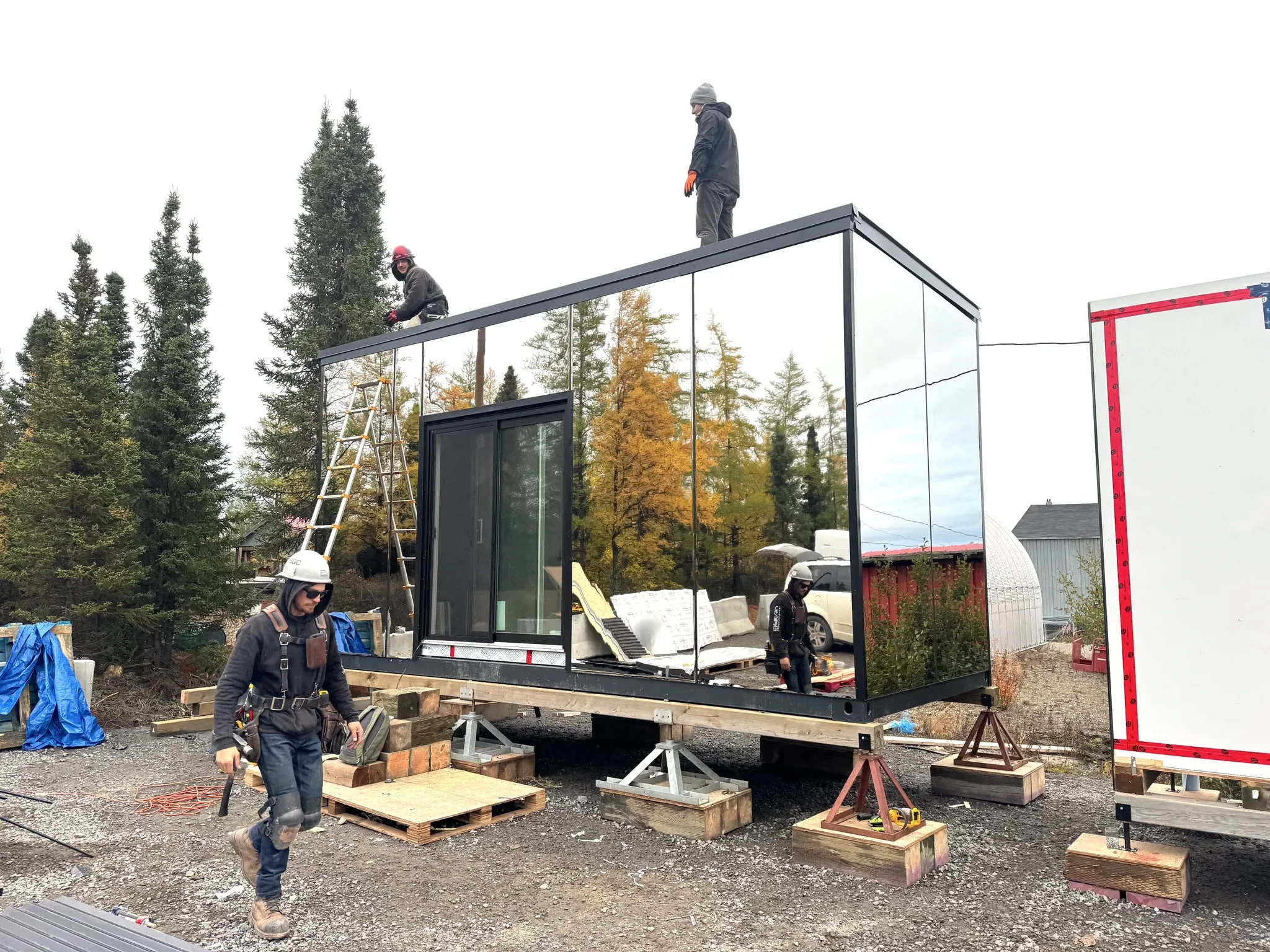
Remote sites cannot rely on cranes, forklifts, or pallet jacks.Tinybox designed each component so that it can be carried and installed by two people without specialized equipment. For example, the mechanical room assembly was completed entirely by hand using simple tools.
3. Labour: Designed for Local Workforce Participation
In many Arctic communities, skilled labour is flown in from southern Canada. Once flights, hotels, and per diems are included, housing construction costs can exceed $1M per unit.
Tinybox’s system is intentionally designed so that:
Components connect via allen keys, bolts, and screws
No advanced framing or specialized trade expertise is required
Training time is minimal
In Kuujjuaq, two local builders — completely new to the system — assembled two units in 10 days.
4. Infrastructure Innovation: Water & Energy Independence
Remote housing delivery must also address infrastructure constraints.
4a. Water: Closed-Loop Bioreactor System
Tinybox is developing an above-ground bioreactor toilet system that reduces water use while eliminating costly below-grade septic systems:
Waste is processed biologically
Water is filtered and recirculated
Traditional septic excavation is avoided
4b. Energy: High-Performance Envelope
To enable off-grid performance and solar viability, Tinybox utilizes vacuum-insulated panels with insulation values ranging from R60 to R120. These were piloted in Kuujjuaq, with sensors installed to monitor winter performance.
Impact on Housing Delivery in Rural and Arctic Communities
Reduced Logistics Costs
Flat-packed panel systems dramatically lower transportation costs compared to volumetric modular units.Lower Equipment Dependency
Hand-carried components eliminate the need for heavy machinery.Local Workforce Activation
Simplified assembly supports local labour participation and reduces reliance on fly-in crews.Infrastructure Cost Reduction
Closed-loop water systems and ultra-high insulation reduce the need for expensive servicing and utility infrastructure.Scalability Across Remote Regions
The model is replicable across rural and Arctic communities facing similar transportation and servicing constraints.