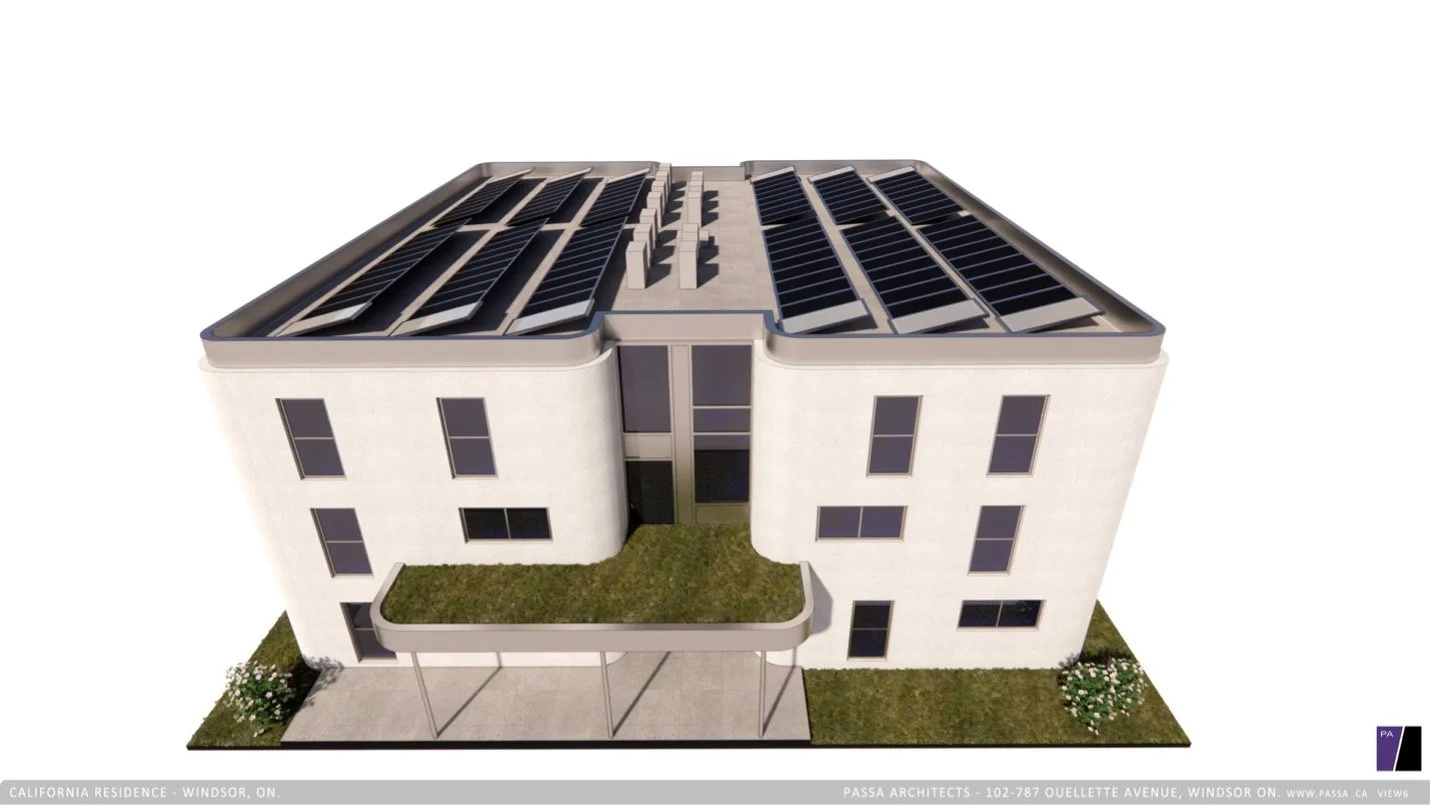
Concept Proven: Additive Construction at Scale
Prepared in conversation with:

Leigh Newman
CEO, Printerra Inc. (Operating as Aretek)
The Challenge: Why Windsor
The University of Windsor has been closely watching Additive Construction (AC) develop around the world. The technology has been used to print entire communities in California, and 3D-printed housing is advancing steadily across Europe. Canadian adoption has been slower, and Dr. Sreekanta Das, Associate Dean of Research and Graduate Studies, understood why: not because the technology doesn’t work, but because the data to prove it works here, under Canadian climate conditions, within Canadian building codes, in a full-scale occupied building, simply didn’t exist yet.
That gap was the opening. Windsor didn’t come to this project looking for a demonstration. They came looking for evidence. “We can theorize and postulate all we want in terms of how we think the building will perform,” said Bill Van Heyst, Dean of the Faculty of Engineering. “But until we actually have one up and have it monitored with various sensors and we’re tracking the data, that’s the real world situation that we’re going to have to test.”
The university had already been building awareness, hosting conferences and workshops to introduce the technology to a wider professional audience. Dr. Das was direct about where the resistance was coming from: “There’s nothing wrong with the technology. They printed the whole town in California, in the desert, like printing houses. They’re building a lot of houses in Europe.” The gap, in his view, was Canadian data. The industry needed a full-scale, occupied building performing under Canadian conditions, permitted under Canadian code. The student residence was designed to fill it.
Dr. Das set out to close that gap and secured the funding to do it: a $2-million investment from the Government of Canada through the Federal Economic Development Agency for Southern Ontario (FedDev Ontario). Desjardins Ontario Credit Union will also contribute $250,000 as part of its commitment to advancing green technology and community development.
Printerra Inc. (now operating as Aretek) was the innovation technology partner that made it buildable.
Project Information
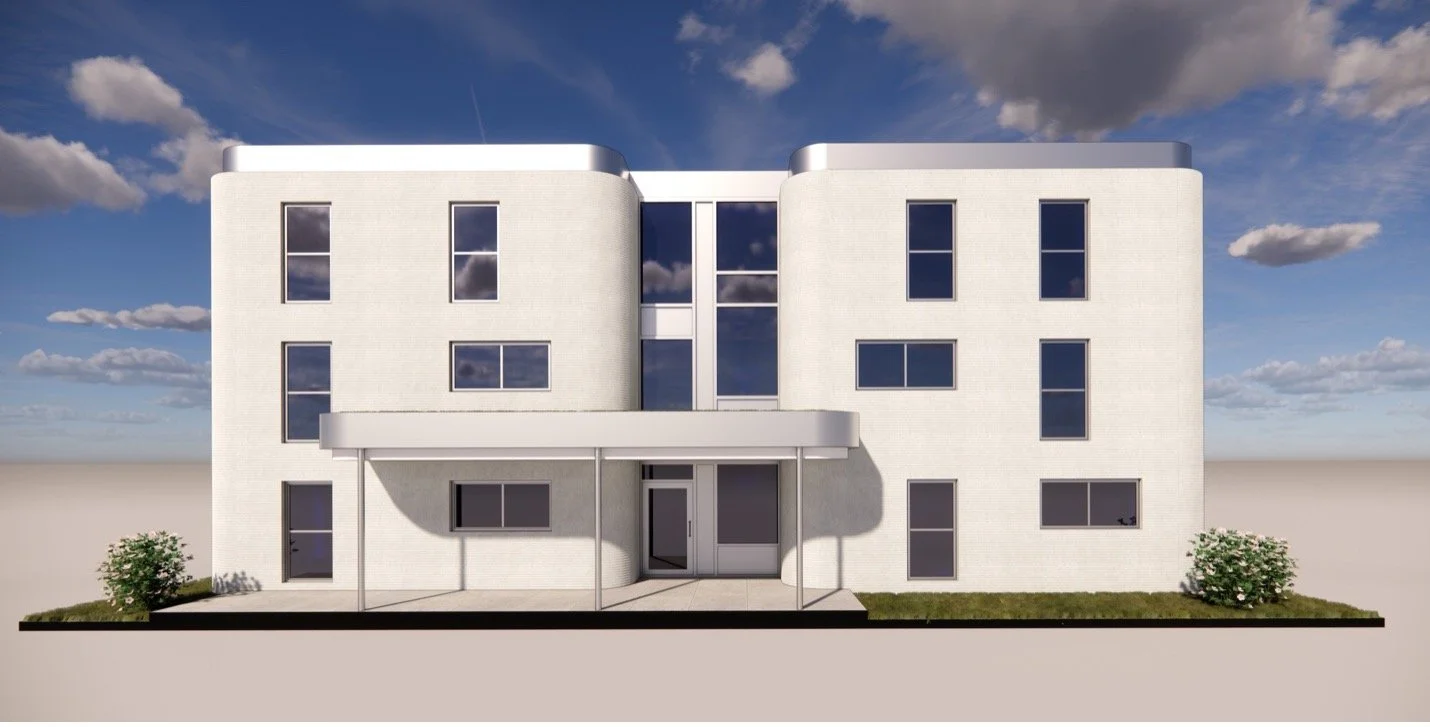
Owner / Operator: University of Windsor
Manufacturer: Printerra Inc. (Operating as Aretek)
Architect: Passa Architects
Engineering: George Mikhael, P.Eng., and Printerra Inc
Location: Windsor, Ontario
Type: Net-Zero Student Residence
Units: 1 unit + 1 mechnical room
Building Height: 3 storeys
Gross Floor Area: 13,271 sq. ft.
Construction Method: Additive Construction (3D Printing)
Expected Completion: Fall 2026
Creating the Regulatory Pathway
There is no prescriptive pathway under the Ontario Building Code for 3D-printed structural concrete walls. Every project starts from zero. For the Windsor submission, Printerra's engineers partnered with Windsor-based engineer George Mikhael, P.Eng. to develop and present the engineering case to the City. The result was Ontario's first Alternative Solution Permit under Part 4 of the Ontario Building Code for a 3D-printed structural wall system: a rigorous, code-compliant approval pathway, not a workaround.
Printerra Inc. now holds a Certificate of Authorization from Professional Engineers Ontario (PEO), under which the Additive Construction Reinforced Wall System (ACRWS) developed for the Windsor project serves as a core building block for Printerra Inc. (operating as Aretek). The ACRWS, along with the engineering documentation and BIM-based permit application templates developed for Windsor, are reusable assets. Future buildings in Windsor can draw on them directly. Projects in other municipalities can adapt the approach to local jurisdictions. What stopped every project at the starting gate is now a pathway with a documented route through it.
The Wall System
The wall system at the centre of this project is Aretek’s Additive Construction Reinforced Wall System (ACRWS), a permit-ready, engineered assembly that integrates structural performance, thermal resistance, air barrier continuity, moisture management, and durability into a single coordinated system. It combines 3D-printed concrete shells with reinforced cast-in-place cores, supported by engineering calculations, laboratory testing, and documented quality control procedures.
For the University of Windsor, the ACRWS enabled net-zero performance by consolidating what conventional construction achieves across multiple trades and materials into one optimized building envelope. Thermal mass, continuous insulation, and reduced thermal bridging work together to lower operational energy demand while minimizing material waste during construction.
A Living Lab
From the moment construction began, the Windsor project has functioned as something beyond a building site. It is, in Dean Van Heyst’s words, a living lab, one that generates the kind of evidence the industry has not had access to before: real data from a full-scale, occupied 3DCP building under Canadian climate conditions, tracking temperature, humidity, energy use, structural behaviour, and material durability over time.
Two research initiatives are running concurrently with construction. The first, an NGen-supported collaboration with Giatec, focuses on adapting sensor technology to embed within 3D-printed wall elements during printing. Those sensors capture real-time data on early-age curing behaviour as walls are printed and continue monitoring the structure through occupancy. The data directly supports Aretek’s ongoing refinement of mix designs, print parameters, and quality control procedures for structural elements.
The second initiative, conducted in collaboration with Dr. Liam Butler of York University, Dr. Sreekanta Das of the University of Windsor, and Dr. Joshua Woods of Queen’s University, involves installing fibre optic sensor cables within the structure during printing. These sensors capture ongoing data on structural behaviour and long-term performance of 3D-printed concrete elements in a full-scale, occupied building, data that has not previously existed for the Canadian context.
Both streams feed directly back into Aretek’s systems, refining structural models, validating mix designs, and building the evidence base that supports future regulatory submissions across jurisdictions.
Impact on Housing Delivery
Reduced Logistics Costs
Flat-packed panel systems dramatically lower transportation costs compared to volumetric modular units.Lower Equipment Dependency
Hand-carried components eliminate the need for heavy machinery.Local Workforce Activation
Simplified assembly supports local labour participation and reduces reliance on fly-in crews.Infrastructure Cost Reduction
Closed-loop water systems and ultra-high insulation reduce the need for expensive servicing and utility infrastructure.Scalability Across Remote Regions
The model is replicable across rural and Arctic communities facing similar transportation and servicing constraints.