Scaling Nonprofit Housing Through Modular + Mass Timber Construction
Prepared in conversation with:

Mwarigha
Vice President, Housing Services
WoodGreen Community Housing
Canada faces a significant shortage of non-profit affordable and supportive housing. Non-profit housing accounts for roughly 3–4% of Canada’s total housing stock, compared to ~7% across the OECD and 8–10% in many European peer countries. This structural gap has left non-profit providers struggling to meet growing demand from vulnerable populations amid rising construction costs, labour shortages, and long delivery timelines. To address this, Canada must pair public investment with new construction and delivery technologies that improve speed, cost certainty, and scalability.
At 60 Bowden Street in Toronto, WoodGreen Community Services, Toronto’s largest non-municipal provider of affordable and supportive housing, in partnership with Assembly Corp, is demonstrating how modular construction and mass timber systems can enable faster, lower-carbon delivery of affordable, supportive senior housing. We aim to offer a technology-enabled model to scale non-profit housing across Canada.
Project Overview
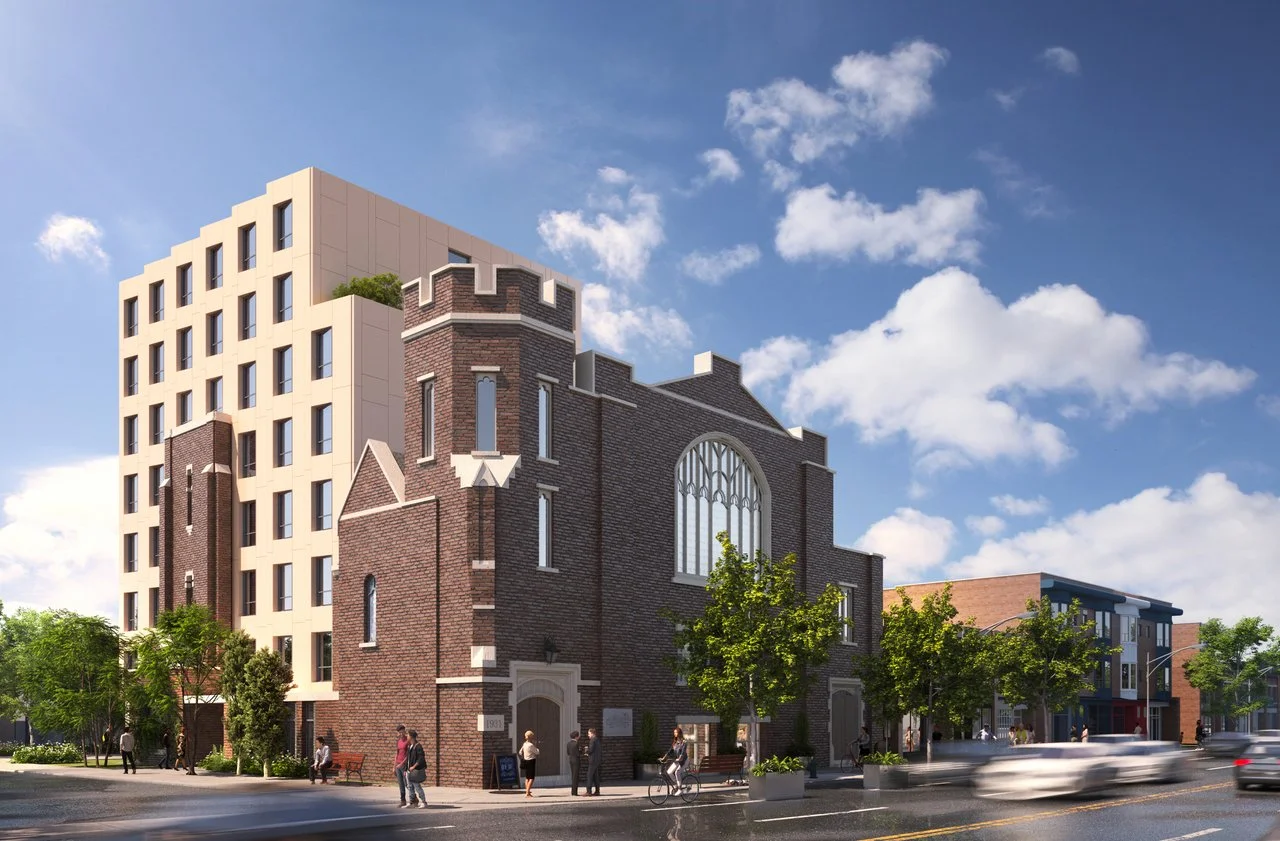
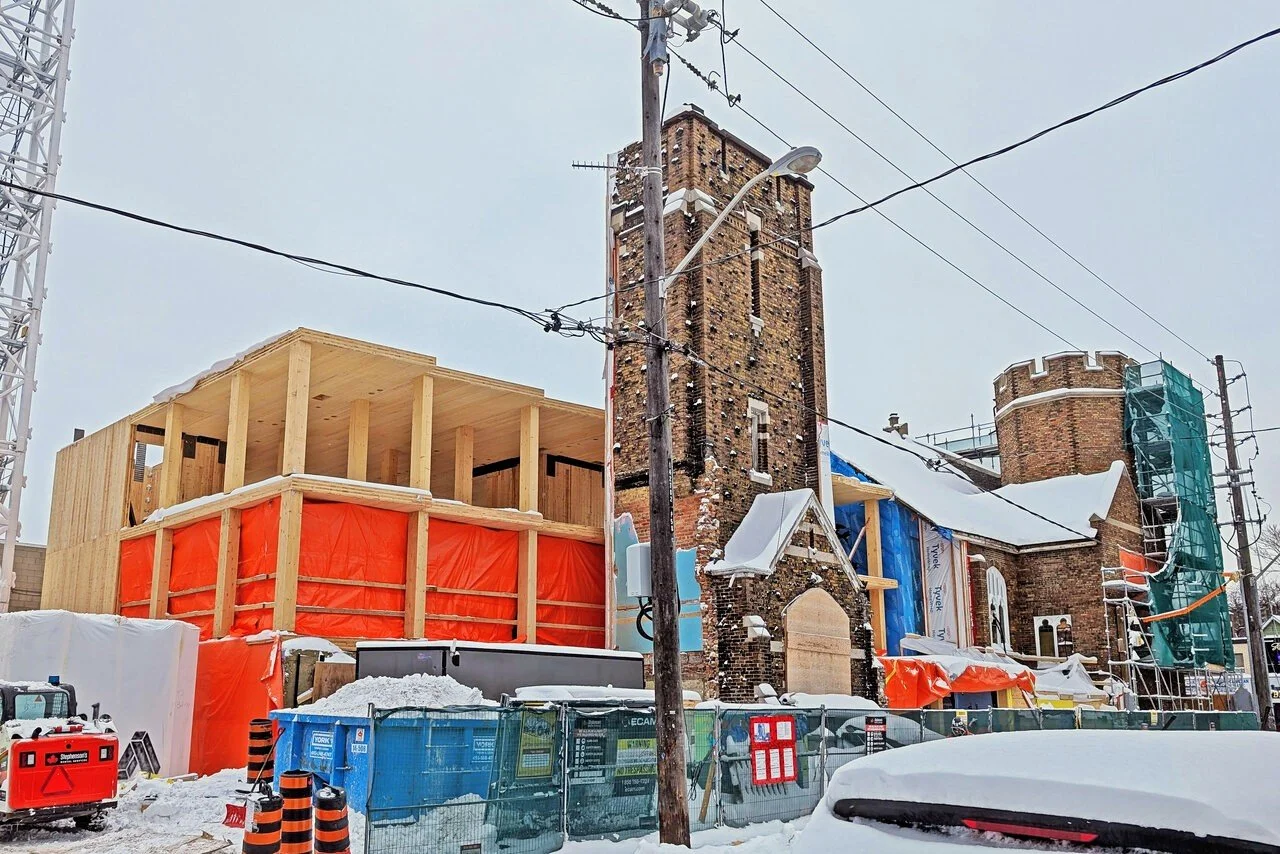
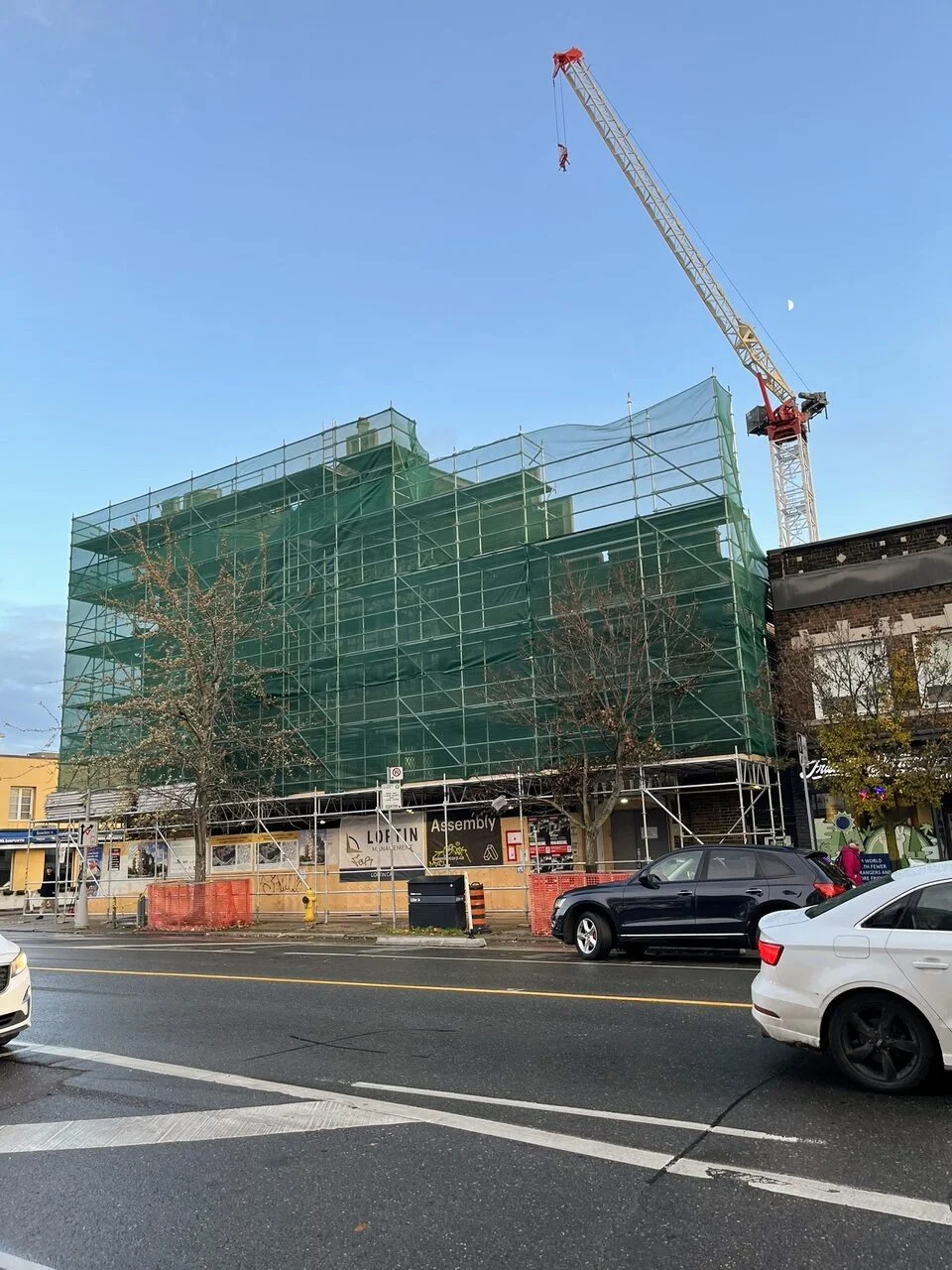
Danforth Baptist Church Redevelopment, designed by McCallum Sather Architects
Development Team
Owner / Operator: WoodGreen Community Housing
Development Partner: Assembly Corp
Architect: McCallum Sather Architects
Heritage Consultant: ERA Architects
Project Information
Location: 60 Bowden Street, Toronto, Ontario
Type: Senior housing
Units: 50 senior housing rental units
Building Height: 8 storeys (28 m)
Gross Floor Area: ~35,000 sq. ft.
Construction Method: Modular + mass timber
Target Completion: Mid 2026
Design & Construction Innovation
The project combines heritage retention, prefabricated mass timber construction, and geothermal energy systemswithin a single coordinated delivery strategy.
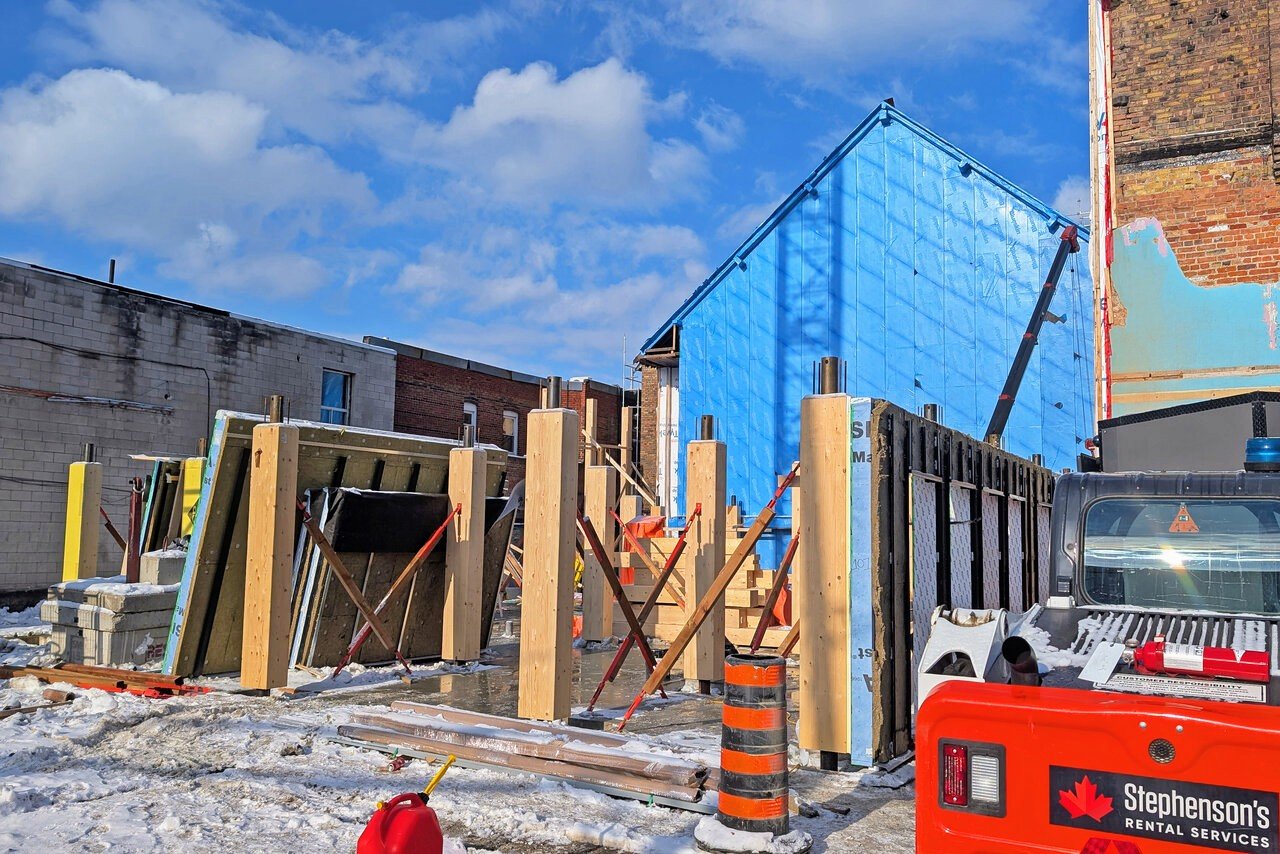
The superstructure consists of prefabricated glulam columns, beams, and large-format timber floor panels installed in a regularized structural grid behind the retained heritage elements of the former Danforth Baptist Church. This approach enabled rapid vertical assembly while significantly reducing embodied carbon compared to conventional concrete construction, all while preserving the site’s architectural and cultural presence along Danforth Avenue.
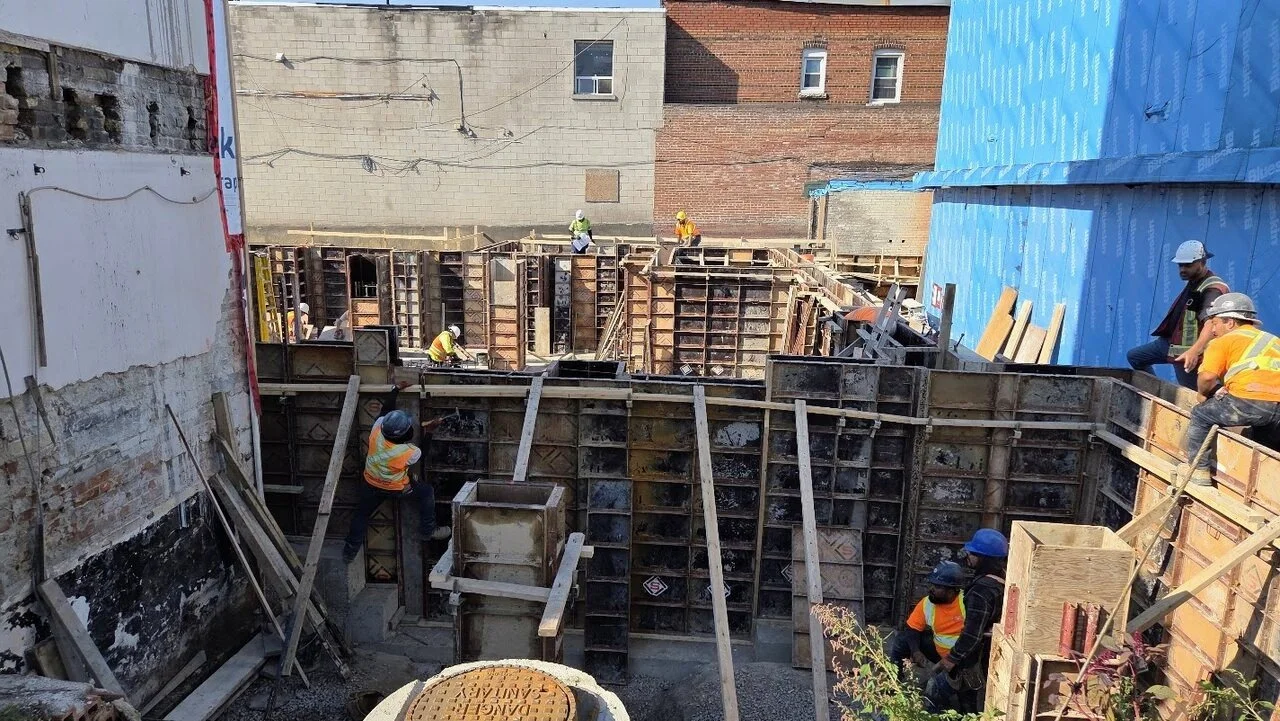
In parallel, a ground-source geothermal energy system is integrated below grade, requiring early coordination with foundation and excavation works. By aligning geothermal installation with the below-grade construction phase, the project team improved sequencing efficiency while delivering a highly energy-efficient, all-electric building.
The modular strategy also allowed the project team to decouple below-grade concrete and geothermal works from above-grade timber installation, improving construction sequencing, reducing schedule risk, and enabling year-round progress.
Impact on Housing Delivery
Faster, More Predictable Construction: Prefabricated timber components reduced on-site assembly time and labour intensity, enabling faster enclosure and improved schedule certainty.
Cost Control Through Systemization: Standardized structural bays and repeatable unit layouts improved cost predictability and reduced construction complexity.
Urban Infill Scalability: The modular + mass timber approach is well-suited to constrained urban sites and can be replicated across similar mid-rise affordable housing developments.
Low-Carbon Building System: Mass timber and geothermal significantly reduces embodied and operational carbon while supporting lighter foundations and lower material volumes.
Integration with Community Fabric: Heritage retention paired with modular construction enables new housing to be inserted into established neighbourhoods while preserving architectural continuity and community-serving uses.
Key Insight Learned
1) Prefabrication Needs an Integrator
Modular and mass timber only delivered value once a dedicated integrator coordinated design, fabrication, logistics, and on-site assembly. For organizations without existing internal capabilities, integrators like Assemlby Corp play a critical role in translating off-site production into on-site execution.
2) Adaptability, Not Standardization, Drives Performance
Modular and mass timber succeeded because they adapted to heritage constraints, endangered species protections, geothermal integration, and tight urban conditions—not because they were rigid systems.
3) Community-Anchored Sites Are a Scalable Housing Opportunity
Underutilized institutional properties—such as faith-owned buildings— paired with mission-aligned partners and adaptive reuse strategies, can be transformed into affordable and supportive housing that preserves community functions, strengthens neighbourhood identity, and maintains continuity of local services.
4) Deal Structure Matters as Much as Design
The project’s success depended on a non-traditional land transaction. Discounted land in exchange for rebuilt sanctuary space demonstrates how innovative partnership models can be as important as construction technology in delivering housing.